Sunday, July 31, 2016

the wo/man in the arena

    President Obama touched on one of the themes of this blog last week at the DNC, and I could not pass up the opportunity to talk about it here.

       “She knows she’s made mistakes, just like I have; just like we all do. That’s what happens when we try. That’s what happens when you’re the kind of citizen Teddy Roosevelt once described – not the timid souls who criticize from the sidelines, but someone ‘who is actually in the arena…who strives valiantly; who errs…[but] who at the best knows in the end the triumph of high achievement.’”


John Muir and Theodore Roosevelt (image source) at Glacier Point in Yosemite in 1903. After spending three days in the wilderness with John Muir, Theodore Roosevelt was convinced to expand Yosemite National Park.

    President Obama’s quote of Teddy Roosevelt (the 26th president of the United States who I admire for putting conservation in the limelight) came from a speech titled “Citizenship In a Republic” Roosevelt gave at the Sorbonne on April 23rd, 1910:

       “It is not the critic who counts; not the man who points out how the strong man stumbles, or where the doer of deeds could have done them better. The credit belongs to the man who is actually in the arena, whose face is marred by dust and sweat and blood; who strives valiantly; who errs, who comes short again and again, because there is no effort without error and shortcoming; but who does actually strive to do the deeds; who knows great enthusiasms, the great devotions; who spends himself in a worthy cause; who at the best knows in the end the triumph of high achievement, and who at the worst, if he fails, at least fails while daring greatly, so that his place shall never be with those cold and timid souls who neither know victory nor defeat.”

    For me, right now, this quote hums to my bones and fingernails. I think I react so strongly to this message because I know how much effort it takes to be aware of my fear; and to not let mistakes and perceived failures deride my thoughts, behavior, and decisions. Learn from them, yes – berate myself for them, no. It inspires me to sidestep my ego, push myself into the arena, and maintain the strength to stay there. Some days I would rather retreat to a cabin in the woods. But resiliency abounds and cannot be ignored; inspiring, seemingly ego-less individuals that move from one arena to the next with grace and humility. There are many examples I could highlight here but there is one story in particular that I think about often. Yitang (Tom) Zhang is a mathematician that made headlines for solving a very difficult problem in number theory while working as a lecturer at the University of New Hampshire.

    Zhang graduated from Purdue University with a Ph.D. in mathematics in 1991 but was unable to get a tenure-track position. After eight years of making ends meet doing odd jobs, he was given a temporary position teaching calculus at the University of New Hampshire. In academia, these positions are difficult because they offer no permanence or stability, are often seen as ‘less than’, and can be difficult on the ego. But Zhang kept himself in the arena, whether he meant to or not, and received many awards for his break through in number theory, including a MacArthur Fellowship in 2014. In previously published profiles (Unheralded Mathematician Bridges the Prime Gap and The Pursuit of Beauty) Zhang describes himself as shy and is quoted as saying “[m]y life is not always easy.” And it has not been free of mistakes either. In 2007 he posted a paper to an online archive (arxiv.org, a Web site that hosts papers before they are published) that was wrong, which he left up so he could eventually fix it. But one quote in Quanta Magazine stood out to me:

       “Zhang said he feels no resentment about the relative obscurity of his career thus far. ‘My mind is very peaceful. I don’t care so much about the money, or the honor,” he said. “I like to be very quiet and keep working by myself.’”

   Zhang continues his work at UC Santa Barbara where he was offered a full professorship in 2015. I would love to hear who keeps you in the arena - please let me know.

UCSB Campus (Storke Tower)

Sunday, July 10, 2016

Zika & Wolbachia III: Wolbachia transmission

    Is Wolbachia going to solve our Zika, dengue, chikungunya, and malaria problems? The short answer is maybe, the long answer is below. I have to be honest; this was a difficult post to write. The topic is technical and I found myself amassing a ridiculously long citation list (a tribute to how much foundational research plays into this story). My usual tack in this blog is to profile one of the citations and highlight how important that research is to the larger puzzle. I did that with the first Wolbachia installment but if I did that with everyone in this story we would end up with a book - which I could be working on. There are many unique and interesting players; I only skimmed the surface of Wolbach, and didn’t even get to Marshall Hertig or the countless others. Regardless of the level of difficulty, I did want to address the potential outcomes we could expect from using Wolbachia-infected mosquitoes to control disease transmission, and address the important question: How effective will Wolbachia-infected mosquitoes be at limiting the spread of human diseases? If you haven’t read the previous two posts in this series (I & II), I recommend you do so.

    It is probably clear by now that scientists are currently relying on decades of Wolbachia research (covering many different types of insects) to get us to this point. In order to take the next step it is necessary to develop experiments testing how Wolbachia will spread through an Aedes aegypti mosquito population once infected individuals are introduced into a disease afflicted area. Interestingly, one of the very intriguing things about Wolbachia that has been extensively studied is its mode of transmission. After years of research, hours of scientific brainpower, and 100+ publications, the true nature of Wolbachia as a genetic manipulator has been revealed. Wolbachia manipulates the reproductive genetics of its host to enable its spread through a population. How does it do this? The mechanisms of manipulation rely on the premise that Wolbachia is vertically transmitted, which means it is passed from parent to offspring. Specifically, Wolbachia is transferred from mother to offspring in the cytoplasm of the egg cell (the cytoplasm is the jelly-like matrix of a cell); Wolbachia cannot be passed from father to offspring in sperm cells. These are the four types of genetic manipulation that can occur in natural populations based on this type vertical transmission:

    1. Cytoplasmic incompatibility: If Wolbachia-infected males mate with uninfected females, or females infected with a different Wolbachia strain, the sperm will die before they can fertilize the egg1,2. The outcome of cytoplasmic incompatibility = increased Wolbachia infection in the population because infected males can only produce infected offspring.

    2. Parthenogenesis: Females can produce offspring without mating with a male3. The outcome of parthenogenesis = increased number of females in a population spreading Wolbachia.

    3. Feminization of male offspring: Wolbachia infection in embryos causes male offspring to develop into females4,5. The outcome = increased number of females in a population spreading Wolbachia.

    4. Male killing: Infected male embryos are not viable, leading to populations that are mostly female6. The outcome = increased number of females in a population spreading Wolbachia.


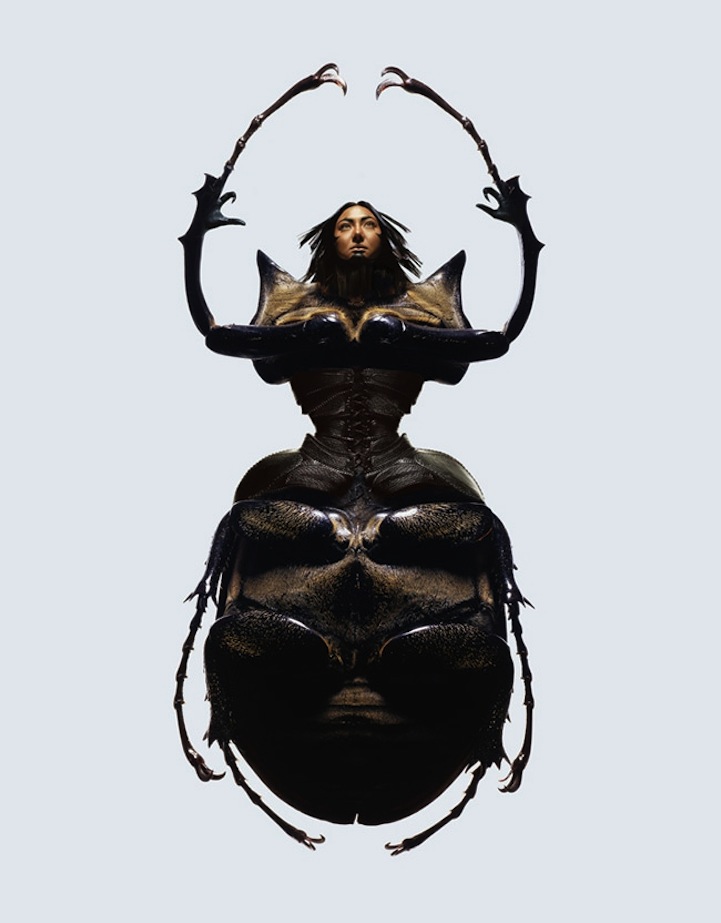
Image by Laurent Seroussi profiled by My Modern Met

    Notice a trend? Each of these mechanisms is often specific to a particular type of insect, so it is important to point out that the fruit fly strains of Wolbachia that prevent A. aegypti from spreading disease manipulate the genetics of their host through cytoplasmic incompatibility.

    Our first window into the transmission dynamics of Wolbachia is based on a study done in 1971 by Janice Harumi Yen and Allan Ralph Barr at the UCLA School of Public Health2. Decades after S. Burt Wolbach and M. Hertig first discovered Wolbachia, Yen and Barr (studying the same species of mosquito, Culex pipiens) found that Wolbachia infection reduced the ability of certain C. pipiens mosquitoes from producing offspring. Through detailed studies, Yen and Barr found that when sperm were swimming toward the nucleus of the egg, they died after swimming through a field of Wolbachia bacterial cells. Yen and Barr called this phenomenon cytoplasmic incompatibility, a very syllabic phrase that essentially means: the environment of the egg is lethal to the sperm and the egg does not get fertilized. Because the sperm died after swimming through the Wolbachia field, Yen and Barr hypothesized cytoplasmic incompatibility had something to do with the Wolbachia cells present within the egg cell of the mosquito.

    Yen and Barr saw the implications of cytoplasmic incompatibility for controlling mosquito populations, but in a different way than is currently being considered. What we are thinking about here is not a way to control mosquito populations, but a way to release infected mosquitoes and then getting the infection to spread. In this scenario, you want uninfected mosquitoes (that can transmit human diseases) to die, but you want infected mosquitoes (that do not transmit human diseases) to reproduce and spread the Wolbachia infection. The beauty of Wolbachia as a genetic manipulator, especially when it comes to cytoplasmic incompatibility, is that it accomplishes both of these goals.
   
   We are building here. This is the foundation scientists are currently relying on to reduce the spread of Zika and other diseases transmitted by mosquitoes. There may be a voice in the back of your head saying, huh, I wonder if a politician at some point in history spoke out about wasteful spending on insects, their bacteria, or the fruit flies from which the effective Wolbachia strain came from? And the answer is yes, numerous times. Imagine if none of this research had been done.

    Now that we know Wolbachia infection has the inherent ability to spread through a population due to cytoplasmic incompatibility, we can plug this information into mathematical models (!) and make theoretical predictions. Don’t stop reading, we don’t have to get into the mathematics to understand what factors will affect how Wolbachia will spread through a mosquito population after infected individuals are released. The first factor to consider is the number of mosquitoes that currently exist in the target area. Jansen and colleagues7 found that the smaller the population of mosquitoes, the fewer infected individuals that need to be released; increasingly larger mosquito populations required the release of more infected adults and eggs. Thus, when planning a release it is important to consider the season, as we know that mosquito populations fluctuate throughout the year. It is also beneficial to have releases coincide with other population control methods (such as some of the biocontrol options talked about in the last post) to reduce population sizes before the release occurs.

    What are the associated risks? With the implementation of any control option there are risks to consider. Risk factors include logistical issues, like not being able to generate enough infected mosquitoes, and public opposition; there are also ecological and economic consequences to consider. Groups of individuals with expertise in different aspects of potential outcomes (biological, economic, and public) were convened to brainstorm and discuss widespread release of Wolbachia-infected mosquitoes8. Generally speaking, the risks were calculated as being very low. One of the biggest concerns was that households would reduce efforts to control mosquitoes (eliminate sources of standing water, etc.). Another concern was that dengue would evolve to overcome the resistance of Wolbachia-infected mosquitoes to dengue infection. This type of concern is persistent when dealing with pathogens that can evolve very rapidly (we have talked about this before). There is a reason a new flu vaccine is developed every year – it is called evolution. However, the panel of experts agreed that this risk was relatively low due to the efficiency with which Wolbachia-infected mosquitoes prevent the transmission of dengue.

    With all this in mind, release of Wolbachia-infected mosquitoes was recently done in Australia in dengue-impacted regions with successful results9. One month before the release of infected mosquitoes standing water sources (mosquito breeding grounds) were removed from the release sites. Over a period of 9-10 weeks, approximately 150,000 mosquitoes were released at each of two sites in Australia. With each subsequent release, the Wolbachia infection rate increased, and continued to increase up to five weeks after the last release of infected mosquitoes. At this point though, is too early to say how the release affected the transmission of dengue, and scientists are currently evaluating the best way to monitor these effects10.

    One important thing to note is that much of the research done on Wolbachia-infected mosquitoes was implemented with the goal of reducing the spread of dengue (primarily), not Zika. However, because these two diseases are similar, and transmitted by the same mosquito vector, this research can be applied to the recent Zika outbreak. This is important because it highlights the importance of supporting research during a time of crisis, as well in between crises. Our ability to respond to disease outbreaks is directly related to the research available at the time the outbreak occurs. This is especially pertinent as the number of infectious disease outbreaks is predicted to increase, in part due to climate change.

    Are you still with me? Have I answered the question? It may seem like the way my twenty-something self would have responded to the question of having a boyfriend: it’s complicated. It is complicated, but I think the bottom line is that Wolbachia-infected mosquitoes will be an important aspect of a multi-pronged approach to controlling human diseases vectored by mosquitoes. I think scientists have come a long way with this line of research and it has the potential to have a significant payoff. If you are still yearning for more I will steer you to the Eliminate Dengue website. This is an amazing and well-organized resource with an extensive publication section that provides PDFs of nearly all of the articles associated with the program (also includes current research on Zika).


1Laven, H (1959) Speciation in mosquitoes: speciation by cytoplasmic isolation in the Culex pipiens-complex. Cold Spring Harbor Symposia on Quantitative Biology 24:166-173.
3Stouthamer R, Breeuwer JA, Luck RF, Werren JA (1993) Molecular identification of microorganisms associated with parthenogenesis. Nature 361:66-68.
4Rousset F, Bouchon D, Pitureau B, Juchault P, Solignac M (1992) Wolbachia endosymbionts responsible for various alterations of sexuality in arthropods. Proceedings: Biological Sciences 250:91-98.
5Bouchon D, Rigaud T, Juchault P (1998) Evidence for widespread Wolbachia infection in isopod crustaceans: molecular identification and host feminization. Proceedings of the Royal Society London B 265:1081-1090.
6Hurst GDD, Jiggins FM, Hinrich Graf von der Schulenburg J, Bertrand D, West SA, Goriacheva II, Zakharov IA, Werren JH, Stouthamer R, Majerus MEN (1999) Male-killing Wolbachia in two insect species. Proceedings of the Royal Society London B 266:735-740.
7Jansen VAA, Turelli M, Godfray HCJ (2008) Stochastic spread of Wolbachia. Proceedings of the Royal Society London B 275:2769-2776.
9Hoffmann AA, Montgomery BL, Popovici J, Iturbe-Ormaetxe I, Johnson PH, Muzzi F, Greenfield M, Durkan M, Leong YS, Dong Y, Cook H, Axford J, Callahan AG, Kenny N, Omodei C, McGraw EA, Ryan PA, Ritchie SA, Turelli M, O’Neill SL (2011) Successful establishment of Wolbachia in Aedes populations to suppress dengue transmission. Nature 476:454-457.
10Lambrechts L, Ferguson NM, Harris E, Holmes EC, McGraw EA, O’Neill SL, Ooi EE, Ritchie SA, Ryan PA, Scott TW, Simmons CP, Weaver SC (2015) Assessing the epidemiological effect of Wolbachia for dengue control. The Lancet Infectious Diseases 15:862-866.

Sunday, June 19, 2016

Zika & Wolbachia II: Disease transmission

    I am back. I had some business to take care of, and then of course there was another visit to spend time with my nephew and fulfill my duties as a new aunt. But I am here and excited to resume our conversation about Zika.

    The first part of the Zika and Wolbachia story morphed into a biography of Wolbach, for whom Wolbachia was named. I provided a teaser about recent research that suggests Wolbachia can reduce Zika transmission by mosquitoes. But I didn’t actually talk about Zika at all, and even though it’s only been a short time (~4 weeks) several new Zika stories have come out. Lucky for us, scientists world-wide are ramping up their efforts to understand Zika, and continue research on other diseases like Ebola, which remain important even when not in the spotlight (ideally congress would agree).

Aedes aegypti (Image credit: James Gathany, Center for Disease Control and Prevention Public Health Image Library)

   In 2009, a group of 17 scientists from Australia and Brazil published a study showing that when the mosquito Aedes aegypti is infected with particular strains of Wolbachia, the mosquitoes were less competent disease vectors, and could reduce transmission of diseases such as dengue, chikungunya, and Plasmodium (malaria) (Moreira et al. 2009). Let's put this in perspective, 85 years after Wolbach and Hertig first discovered Wolbachia in a mosquito in Boston (Culex pipiens), and after decades of Wolbachia research resulting in hundreds of publications that have little to do with humans and disease transmission, scientists discovered that Wolbachia could reduce the number of humans contracting deadly viruses. If this is not a solid argument for exploratory research then go fishing. Listen in, and we will see how it works. But first, there are several pieces of information that will help you follow the story: 1) The three main players are mosquitoes, Wolbachia bacteria, and Drosophila fruit flies, 2) There are over 3500 species of mosquitoes and only a handful carry diseases (a.k.a disease vectors), 3) Some mosquito species carry one disease, some carry many diseases, most carry no diseases, 4) The main species of mosquito that carries dengue, chikungunya, and Zika is Aedes aegypti, which is not typically infected with Wolbachia in the wild, and 5) Wolbachia is a genus of bacteria comprising many different types/strains that infect a variety of different insects. The most well-studied strains of Wolbachia are from the model organism Drosophila melanogaster, a fruit fly we will inevitably revisit in future posts.

Drosophila melanogaster: Illustration by Katy Wiedemann (Wiedemann Illustrations)

    Moving on. Methods to reduce the number of humans contracting diseases carried by mosquitoes focus on prevention, either through the development of vaccines or use of bug spray to prevent mosquito bites. The other option is to try and get rid of mosquitoes. Methods of reducing mosquito populations include spraying copious amounts of DDT into houses with growing children, and introducing copepods that eat mosquito larvae.
     
    Between 2000 and 2008, data from several labs coalesced on a different kind of preventive method. By infecting A. aegypti mosquitoes with certain Wolbachia strains isolated from the fruit fly D. melanogaster, the life span of A. aegypti was reduced. From the perspective of limiting disease transmission, this is good because many mosquitoes die before they can transmit disease. At the same time, another group of scientists studying Wolbachia in D. melanogaster found that certain strains were beneficial to D. melanogaster individuals that had harmful insect viruses such as Drosophila C virus, Flock House virus, and Cricket paralysis virus.

    In 2009, Moreira and colleagues put these two things together and hypothesized that Wolbachia infected mosquitoes would be less effective disease vectors. The idea was to test whether A. aegypti mosquitoes infected with Wolbachia from D. melanogaster fruit flies would reduce disease transmission. The answer was yes. The authors showed that A. aegypti with Wolbachia are resistant to several diseases, which prevents the mosquito from being able to pass the diseases onto the next human they bite. The mechanism for how this works remains unclear. The authors suggest it has something to do with how the mosquito immune system reacts to the Wolbachia bacteria, but no direct link was found. The other possibility is that there is competition for resources between the disease and Wolbachia in the cells of the mosquito, and Wolbachia outcompetes the disease. But no conclusive evidence has been presented to support either hypothesis. Regardless of the mechanism, it is clear that Wolbachia infected mosquitoes offer a two-pronged approach for controlling disease transmission: they have a shorter life-span and they show resistance to several different diseases. As a result, non-profit groups such as Eliminate Dengue Program are using this approach to slow the spread of dengue (and other diseases) in multiple locations around the world.

Eliminate Dengue Program


    That was the status of things before the spread of Zika skyrocketed last year, and was declared a Public Heath Emergency of International Concern (PHEIC) on February 1st, 2016. Scientists were quick to react and on June 8th, 2016, six Brazilian researchers published the results of a study demonstrating the effectiveness of Wolbachia to block two Zika strains currently being transmitted by A. aegypti mosquitoes in Brazil (Dutra et al. 2016). The release of Wolbachia infected mosquito eggs and adults is currently underway in Brazil and scientists are optimistic about the spread of the Wolbachia in Brazilian A. aegypti populations. All of this is very recent but at present it appears to be good news for humans, science, and exploratory research.

   Exactly how Wolbachia spreads in insect populations is an intriguing topic we will investigate next time. It is based on decades of exploratory research covering many different Wolbachia strains in many different types of insects.

Monday, May 23, 2016

Life

   Life caught up with me these last two weeks so I will have to continue the Zika & Wolbachia miniseries in the next post.


Logo credit

   On Saturday I had the pleasure of participating in a BioBlitz at Cabrillo National Monument in San Diego, CA. This event was part of the National Parks BioBlitz series to celebrate the 100th anniversary of the National Parks System. What is a BioBlitz you ask? A BioBlitz is a 24-hour survey of the plants and animals that live in a defined area. Scientists specializing in everything from plants to mammals, birds, and insects convene and document their findings as a series of observations. While the goals of a BioBlitz are to document the biodiversity of a given area, they also serve to introduce the public to the flora and fauna of a specific place. Could a BioBlitz be conducted in your backyard? Definitely.

   During Saturday’s BioBlitz I was a member of the invertebrate team and helped survey for insects, primarily beetles. For entomologists, the BioBlitz can be a time consuming process. Unlike ornithologists that document sightings with photographs and can usually provide species identifications on the spot, entomologists need to collect and curate their specimens before identifications can be made. I collected throughout the day and sorted and pinned my specimens by 9pm. At 9:10pm I was running out of gas at a time when I needed it most, to start identifying. Do I sound like I am complaining here? I may be - just a little. The main reason is that identifying insects can be extremely time consuming. While there are some entomologists that invest huge amounts of time becoming familiar with the insects of a given region, this is often a thankless effort. And thus, people with this level of expertise are few and far between. Would I like to be one of these people? Yes. Do I have the time it takes to accomplish this? No. One of the reasons I don’t is because, unfortunately, these efforts are not often valued by employers and granting agencies. As a youngish scientist I invest my time collecting data for projects that have a chance of getting funded and being published in high profile journals. I do this to keep my scientific career afloat. I am a little torn about this method of prioritization, and have set a goal to invest at least a few hours every week (or two) with the beetles in my backyard.  

   I am not the only one that finds this upsetting, not to mention detrimental to scientific research in general. This was brought to my attention most recently by an article in Scientific American highlighting the loss of natural history courses at colleges and universities. Natural history classes such as botany (plants), entomology (insects), ornithology (birds), ichthyology (fishes), and herpetology (amphibians and reptiles), provide students with the nitty gritty of a specific group of organisms, an overview of their diversity, and how to identify them. The level of identification expertise is usually broad, but provides the foundation for continued refinement. The article highlighted the findings of a recent study published in BioScience that revealed that while over 90% of scientists agreed that natural history was important to their field, young scientists felt under prepared in this area.

   What does a frustrated entomologist do? Tell stories and find a way to communicate the relevance of a name, a species description, and a sound identification.

   I am also a newly minted aunt. Much of my time in the last two weeks has been devoted to my sister and brother-in-law during the birth of my nephew, Matteo Karolos Castañeda. I could not be more proud.

Monday, May 9, 2016

Zika & Wolbachia I: Wolbach

   “‘It was just curiosity-based work, total serendipity’ Dr. O'Neill said.” (Carl Zimmer quoting Dr. Scott O'Neill in his article Bacteria-Infected Mosquitoes Could Slow Spread of Zika Virus published in the New York Times May 4, 2016)

   Can I quote a quote? I did, and hopefully I provided enough citations to make it legit. I know it is not wise to try and out-zimmer Carl Zimmer but there is so much to write about here I am going for it. This quote encompasses the mission of this blog (**although - see my commentary below) and is a great example of the return on our investment in curiosity. In this case, the return is slowing down the spread of Zika and other diseases transmitted by insects using Wolbachia, an insect bacterial parasite. The reason we know about Wolbachia, and its potential to reduce the spread of viruses like Zika, is because of public and institutional support for unbridled curiosity. The Wolbachia-Zika story is part of a decades long history of research on Wolbachia that goes back to 1924.

   A brief introduction. As with last week and Ebola, Wolbachia has been covered extensively. And while there is not as much known about Zika, there are many articles describing what has been discovered thus far. We will establish a basis for the underlying biology and go from there. Wolbachia is a genus of bacteria (unicellular organisms that have all of the machinery necessary to replicate themselves). While not harmful to humans, Wolbachia live within the cells of insect hosts. Zika, on the other hand, is a virus that infects humans and has been linked with microcephaly in infants. Like Ebola, and all other viruses, Zika does not have the cellular machinery to replicate itself and must co-opt the machinery from the cells of an infected host. How are Wolbachia and Zika linked? To understand that we need to take a closer look at decades of work by a long list of scientists, including Scott O'Neill, that began in 1924 when Hertig and Wolbach first discovered (and which Hertig later named) Wolbachia.


Image credit: Seth Bordenstein (from EOL). Image description: Insect testes showing sperm DNA (red) and Wolbachia endoysymbionts (green).


   If we start from the beginning, however, I think we will need to break this up into multiple posts, which is okay. There is plenty here to keep us all fascinated. Today we will start with Simeon Burt Wolbach, after whom Wolbachia was named, and based on what I have seen so far he is deserving of his own post. Here is an excerpt from a tribute published in the Harvard Medical School Alumni Bulletin:

“S. Burt Wolbach, one of Harvard Medical School's most beloved as well as one of its most distinguished professors, died on March 19, 1954, in his seventy-fourth year, after a relatively brief illness, of cancer of the prostate. In the minds of many, both his scientific achievements and his personality present a perfect synthesis of the best in the past and in the present. Sound training in morphology, guided by imaginative insight, made it possible for him to place new and fruitful interpretations upon cellular structural mechanisms. In his personality too, one was aware of that blend of conventional and liberal attitudes, an appreciation of the traditions of the past and the freedoms of the present. Thus his stature, [equaled] by few, resulted from that rare integration of the austerity and vision of the scientist with the humanity and warmth of the guide and teacher. His name will be remembered with a lift of the heart and a quickening of the imagination by student, colleague and friend.” (Dr. Charlotte L. Maddock and Dr. Arthur T. Hertig (1954) Harvard Medical School Alumni Bulletin 28: 41-45).  


Figure 1 from Hubbard (1987). Figure caption: "S. Burt Wolbach, circa 1938. Etching, 300 x 251 mm, by Arthur Heintzelman (1891-1965)."

   Simeon B. Wolbach was a polymath (much like my beloved Schrank) growing up riding horses on the plains of Nebraska “…ranging free with the cowboys…..” in the late 1800s, and graduating cum laude from Harvard Medical School in 1903. Wolbach subsequently held a variety of esteemed posts at various institutions on the east coast where he pursued research in two fields of study, infectious disease and vitamin deficiency. The diseases he worked on included both viral (i.e influenza and Rocky Mountain spotted fever) and bacterial (tuberculosis, leprosy, syphilis, and typhus) pathogens. In fact, it was his work on typhus that led to the discovery of Wolbachia. While Wolbach’s work on disease transmission is the most relevant to this blog post, some think “[h]is most brilliant work was done on those disorders associated with vitamin deficiency and excess.” Among other distinctions, the quality and breadth of Wolbach’s research granted him induction to the National Academy of Sciences in 1938.

  The language used to describe Wolbach’s character is cryptic and intriguing. It outlines a person of genuine character that embodied both seriousness and a sound sense of humor. His lecture style was described as non-didactic, but his students clearly revered him as was demonstrated by two separate instances where they paid him tribute by coming to lecture with a red carnation in their lapel, something Wolbach did on a regular basis. While perhaps a tough nut to crack, it seems that upon cracking a plethora of goodness was exposed. He remained an avid outdoors-man through his academic pursuits and continued riding horses throughout his life. “It was there, along the banks of the Jeannotte River and Lac Castor, that his friends knew him best. There he became a boy again and would engage in an impromptu canoe race, or chase a moose in the lake until he could smack its rump with a paddle.” (All quotes from the previous two paragraphs are from the Maddock and Hertig tribute referenced above.)

   I could go on, and am surprised a more detailed biography of Wolbach has not been published. When I started looking for one I actually found that in addition to all of the accomplishments listed in the Harvard Medical School tribute, Wolbach appears to have written a biography of Hans Zissner, a physician, bacteriologist, and author of Rats, Lice, and History. !!. The more I find the more I am intrigued by these scientists, what amazing stories. I literally have about 20 tabs open in my web browser right now.

   I found an example of Wolbach’s non-didactic delivery method, combined with the foresight of a complex mind, in this passage from “The Glorious Past, the Doleful Present, and the Uncertain Future of Pathology”, a presentation he gave on Harvard Alumni Day in 1952 (his last public presentation) that was subsequently published in the Harvard Medical School Alumni Bulletin 28: 41-45:

“What do I mean by the Science of Pathology? Years ago, challenged by Theobald Smith, I defined Pathology as that branch of Biology which investigates the reactions of living things — unicellular to man — to injurious agents. Deleterious environments of all sorts are productive of pathological states and a super Darwin become pathologist would, I believe, have a grand time in attacking problems of phylogenesis from the viewpoint of a pathologist. The scientific use of the imagination is legitimate and I get satisfaction in believing that the adaptation of marine creatures to terrestrial conditions was the result of eons of responses in myriads of survivors of non-lethal injuries.”

I will give you, and myself, some time to ponder this and we will pick-up here next time.


PS **My issue with this quote, and this is my opinion only, is that the tone highlights an ongoing problem we all have of downplaying the importance of exploratory research. I do not know Dr. O'Neill and I want to make it clear that I am not slighting him; he and his colleagues have done amazing work, which we will look at next time. In all honesty, I think the quote reflects Dr. O'Neill’s humility while talking about his own research. But I am going to go all Sheryl Sandburg on this right now. I think we need to lean in to the immense impact of exploratory research. I think scientists, myself included, need to be careful about downplaying the importance of exploratory research. When I first read Dr. O'Neill’s quote I thought, bingo, perfect for the blog, and retweeted it. It wasn’t until I was typing it out for this post that I picked up on the tone, and thought about how much language can impact public perception. If we want curiosity driven research to be understood and funded by the public we need to be proud and put it on the pedestal it deserves. The same is true when we talk about taxonomy and natural history museums, which I have written about before. If we want our taxonomists to be rock stars and our museum collections respected, we cannot refer to them as a bunch of dead insects. Which happens, from places we should least expect it.

 
Again, I don't mean to diss anyone here, just highlighting the need to be more aware (and UConn got $500k, not $500).